
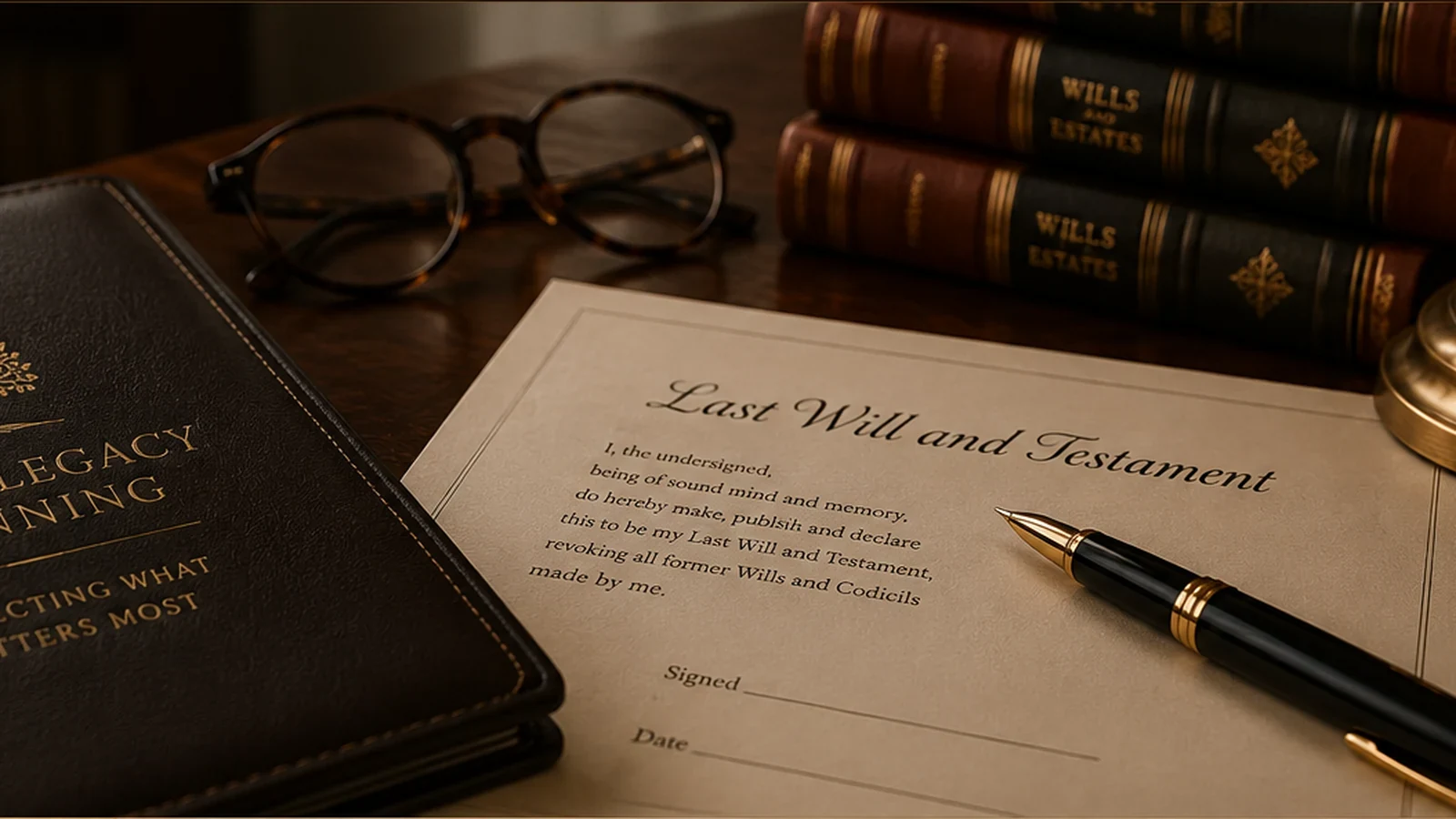
Is a Basic Will Enough for Your Family?
This guide explains what a basic Will usually does, where its limitations may become relevant and when it may be sensible to review Wills, Lasting Powers of Attorney, Trust planning and family circumstances together.
We will call to discuss your enquiry, check adviser availability for your postcode and arrange a pre-booked home visit where available.
Is a Basic Will Enough?
Sometimes, yes. A straightforward Will may be suitable where your wishes, assets and family circumstances are relatively simple.
But a Will mainly deals with what should happen to your estate after death. It does not replace Lasting Powers of Attorney for lifetime decision-making, and it may not by itself address every issue created by jointly owned property, businesses, blended families, Trust planning or beneficiaries with more complex needs.
The right question is therefore not “How complicated should my Will be?” but “Does my overall estate plan reflect my actual circumstances?”
What Does a Basic Will Usually Do?
A Will allows you to record important decisions about what should happen to your money, property and possessions after your death. It can also appoint the people who will administer your estate.
GOV.UK says a Will should set out who you want to benefit, who should look after children under 18 where relevant, who will act as executor and what should happen if an intended beneficiary dies before you.
A straightforward Will can commonly cover
- Who should inherit your estate
- Who should act as executor
- Guardians for children under 18 where appropriate
- Specific gifts or charitable gifts
- What happens if a beneficiary dies before you
That can be entirely appropriate for many people. The issue is not that a “basic” Will is somehow poor planning. The issue is whether your circumstances contain questions that a straightforward Will alone cannot fully deal with.
Read GOV.UK guidance on writing a Will →What a Will Does — and What May Need Separate Planning
Different documents and planning tools have different purposes. They should not be treated as interchangeable.
| Planning question | A Will may address | May need wider planning |
|---|---|---|
| Who inherits after death? | Yes — this is a core purpose of a Will. | Trust planning may also be relevant depending on beneficiary needs. |
| Who administers the estate? | A Will can appoint executors. | More complex estates may require wider professional or tax input. |
| Who makes decisions during your lifetime? | No — a Will does not provide lifetime attorney authority. | A Lasting Power of Attorney may be relevant. |
| Jointly owned property | A Will may be relevant, but ownership structure matters. | Property ownership should be reviewed alongside the Will. |
| Blended-family circumstances | A Will can record wishes and beneficiaries. | Trust or more detailed estate planning may deserve consideration. |
| Business interests | A Will can form part of succession planning. | Company documents, ownership and business continuity may also matter. |
| Inheritance Tax | A Will can influence how an estate passes. | Tax advice may be appropriate where the estate or planning is more complex. |
Who May Need More Than a Basic Will?
These circumstances do not automatically mean you need complicated planning. They are simply good reasons to look at the wider picture.
Property Owners
The family home, jointly owned property, rental property or a larger portfolio can make ownership and inheritance questions more important.
Property-owner planning →Landlords & Investors
Multiple properties can introduce mortgages, income, management responsibilities and additional succession considerations.
Explore advanced planning →Business Owners
Company shares, control, succession and family dependence on the business can sit outside the questions answered by a simple Will.
Business & family planning →Blended Families
A spouse or partner and children from current or previous relationships can create competing needs that deserve careful planning.
Blended-family planning →Parents & Grandparents
Young beneficiaries, grandchildren or beneficiaries who need additional support can make the timing and structure of inheritance relevant.
Explore Trust planning →Larger or More Complex Estates
Property, savings, investments and business interests can make tax, administration and beneficiary planning more significant.
Explore inheritance planning →
What Happens If You Are Alive but Cannot Deal With Your Own Affairs?
A Will primarily deals with what happens after death. It does not appoint attorneys to make decisions for you during your lifetime.
A Lasting Power of Attorney is a separate legal arrangement. Depending on the type of LPA and the circumstances, it can allow chosen attorneys to make certain property, financial, health or welfare decisions.
- Property & Financial Affairs LPA
- Health & Welfare LPA
- Trusted attorneys chosen in advance
- Separate from your Will
Wills, Trusts, LPAs & Wider Family Planning
The right plan does not mean using every available document. It means understanding the role each one could play.
Will Writing
Records how you want your estate to pass and who should administer it.
Will Writing Services →Lasting Powers of Attorney
Can give chosen attorneys authority to make certain decisions within the terms of the LPA and applicable law.
LPA guidance →Trust Planning
May be relevant where assets are to be held or managed for beneficiaries according to particular terms.
Trust Planning →Advanced Family Legacy Planning
Brings together relevant Wills, LPAs, Trusts, property, business and family circumstances.
Advanced planning →When a Straightforward Will May Be Enough
Good estate planning should be proportionate. More complicated arrangements are not automatically better.
A Simple Will May Be Suitable Where
Your family structure is straightforward, your wishes are clear, your assets are relatively uncomplicated and there are no particular beneficiary, property, business or Trust issues requiring wider planning.
Even then, it can still be sensible to consider whether Lasting Powers of Attorney are relevant because they deal with a different period of life.
A Wider Review May Be Worthwhile Where
Property ownership, business interests, blended-family circumstances, vulnerable or young beneficiaries, significant gifting or a larger estate introduce questions that a straightforward Will may not answer alone.
The purpose of a review is to identify genuine gaps — not to add products or complexity where they are not needed.
What About Inheritance Tax?
A Will can be relevant to how an estate passes, but Inheritance Tax depends on the value and composition of the estate, available allowances, gifts, relationships between beneficiaries and other circumstances.
GOV.UK currently states that Inheritance Tax is normally charged on the part of an estate above the available tax-free threshold, subject to the rules and allowances that apply to that estate.
Trusts and lifetime gifts can themselves have tax consequences. They should therefore never be presented as automatic or guaranteed ways to avoid Inheritance Tax.
Where tax is a material part of the planning, appropriate specialist tax advice may be needed alongside the estate-planning work.
Read current GOV.UK Inheritance Tax guidance →Might Your Current Will Need a Wider Review?
Tick anything that applies to your circumstances.
This checker does not provide legal or tax advice. It simply identifies factors that may be worth discussing in a Family Legacy Review.
Tick any points that apply to you.
When Should You Review Your Will or Estate Plan?
A valid Will can still stop reflecting your life if circumstances have changed significantly since it was made.
Family Changes
Marriage, separation, a new relationship, children, grandchildren or bereavement can all change planning priorities.
Property Changes
Buying, selling, inheriting or adding rental property can materially change the estate.
Business Changes
Starting, buying, selling or growing a business can introduce new assets and succession questions.
Beneficiary Changes
A beneficiary's age, vulnerability, relationship or circumstances may change over time.
Financial Changes
Substantial growth in property, investments, pensions or other wealth may justify a fresh review.
Uncertainty
If you cannot confidently explain what your current Will does, that alone can be a good reason to review it.
Useful GOV.UK Estate-Planning Resources
These official sources provide useful background alongside professional advice.
Making a Will
Official guidance on making, signing, witnessing and updating a Will.
GOV.UK Will guidance →Lasting Power of Attorney
Official information about LPAs and appointing attorneys.
GOV.UK LPA guidance →Inheritance Tax
Current official thresholds, rules and allowances for Inheritance Tax.
GOV.UK Inheritance Tax →Find Out Whether It Still Fits Your Family
You do not need to decide for yourself whether you need a new Will, an LPA, Trust planning or anything more advanced. Start by reviewing what you already have and the circumstances around it.
Related Estate-Planning Guidance
Frequently Asked Questions
Is a basic Will enough for most people?
What is the difference between a basic Will and estate planning?
Do I need more than a Will if I own a house?
Does a Will cover what happens if I lose mental capacity?
Does everyone with a Will need a Trust?
Is a basic Will enough for a blended family?
Do business owners need more than a Will?
Can a Will reduce Inheritance Tax?
How often should I review my Will?
What if my Will was written many years ago?
What is a Family Legacy Review?
Does Evans Legacy Planning only help clients in Cardiff?
Do Not Guess Whether Your Current Will Is Enough
Review your Will alongside your family, property, business interests, beneficiaries and lifetime planning. If a straightforward Will is enough, the planning should stay straightforward. If gaps exist, you can understand them before deciding what to do next.